
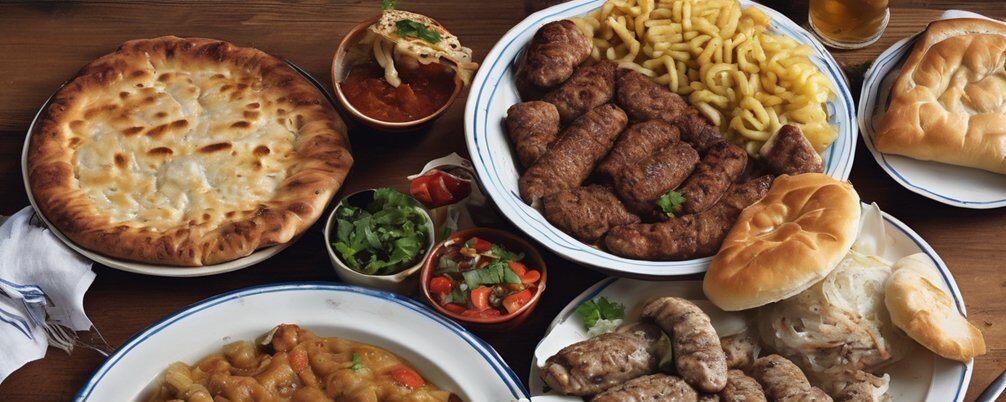
What to Eat in Bosnia – Bosnia’s cuisine offers a rich blend of Balkan, Ottoman, and Mediterranean influences, making it a must-try for food enthusiasts. Start your culinary journey with ćevapi, small grilled sausages served in fluffy somun bread, often accompanied by raw onions and a touch of red pepper. This dish is a local staple and a favorite among both residents and visitors.
Another iconic choice is burek, a savory pastry filled with minced meat or cheese. Its crispy layers and hearty filling make it a satisfying meal or snack at any time of day. For a taste of traditional home cooking, sample begova čorba, a slow-cooked chicken and vegetable soup known for its comforting, rich flavors.
Bosnian desserts are equally memorable. Tufahija, a poached apple stuffed with walnuts and topped with cream, showcases the region’s love of nuts and fruit. Baklava, soaked in sweet syrup, provides a perfect finish to your meal.
Pair your food with robust Bosnian coffee, served in a copper džezva, or try rakija, a strong fruit brandy popular throughout the Balkans. Explore local restaurants and markets in Sarajevo, Mostar, and beyond to discover authentic dishes and hidden culinary treasures. Enjoy the unique tastes Bosnia has to offer while experiencing its warm hospitality and vibrant food culture.
Must-Try Bosnian Dishes
Experience the authentic flavors of Bosnia by exploring its must-try dishes, each representing centuries of culinary tradition. Bosnian cuisine is shaped by a blend of Eastern and Western influences, resulting in dishes both comforting and full of character.
Begin your culinary journey with ćevapi, small, juicy grilled sausages made from minced meat. Served with somun bread and finely chopped onions, ćevapi is a local favorite for lunch or dinner.
Next, savor burek, a crisp pastry filled with spiced meat or cheese. This hearty dish is commonly enjoyed as a quick breakfast or snack.
Warm up with begova čorba, a slow-cooked chicken and vegetable soup known for its creamy texture and deep flavors. It’s especially popular during colder months.
For dessert, try tufahija—poached apples stuffed with walnuts, often finished with a touch of whipped cream.
Each meal offers insight into Bosnia’s rich heritage and invites you to enjoy its diverse food scene. Exploring these iconic dishes is essential for anyone seeking an authentic taste of Bosnia.
The Best Places to Eat Authentic Bosnian Food
Exploring Bosnia’s culinary scene reveals a world of authentic flavors rooted in tradition. The best places to eat authentic Bosnian food are often tucked away in family-run establishments and traditional aščinicas, where recipes span generations.
Beyond the cities, rustic roadside eateries and vibrant markets present hidden gems. Here, you’ll discover homemade stews, fresh bread, and stuffed vegetables crafted with care. These spots exemplify Bosnian hospitality, where every meal feels like a celebration of local culture.
To experience the true essence of Bosnian cuisine, seek out venues favored by residents. Local patronage is a reliable sign of quality and authenticity.
Whether you’re in a bustling market or a quiet alley, these dining spots promise genuine flavors and a warm welcome. For any traveler in search of the best Bosnian food, following the footsteps of locals leads to the most memorable meals.
What to Eat in Bosnia – Bosnian Desserts to Try
Indulging in Bosnian desserts offers a memorable finish to any traditional meal. The country’s sweets reflect centuries of culinary tradition, blending local flavors and time-honored techniques.
Tufahija stands out as a classic choice—an apple poached until tender, filled with walnuts and sugar, then served in syrup for a satisfying balance of fruit and sweetness.
Baklava, a regional favorite, features crisp layers of pastry, ground nuts, and a drizzle of honey or syrup. This dessert is beloved for its rich texture and flavor.
Those seeking something softer should try hurmašice—semolina cookies that soak up aromatic syrup and melt with each bite.
For a unique experience, kadaif showcases fine strands of pastry baked until golden and soaked in syrup, offering a delicate crunch.
Sutlijaš, Bosnia’s creamy rice pudding, delivers gentle comfort and is often enjoyed as a soothing end to a hearty meal.
Sampling these Bosnian desserts is essential for anyone interested in exploring the country’s culinary heritage. Each bite reveals a blend of Eastern and Western influences, making dessert not just an afterthought but a celebration of Bosnia’s vibrant food culture.
Traditional Bosnian Drinks to Order
Exploring Bosnia’s traditional drinks offers a direct path to understanding the country’s rich culture.
Begin with Bosnian coffee, an iconic beverage served in a džezva. It’s strong, unfiltered, and best enjoyed slowly, often accompanied by a sugar cube or Turkish delight. This ritual is central to Bosnian hospitality.
For a non-caffeinated option, sok od zove—a refreshing elderflower juice—is widely enjoyed in spring and summer. Its floral notes provide a pleasant contrast to heartier meals.
If you’re seeking something with a bit more intensity, try rakija. This powerful fruit brandy, commonly made from plums (šljivovica) or grapes, is a staple at celebrations and social gatherings. Sip cautiously, as its strength is part of its appeal.
Ayran, a salted yogurt drink, is another favorite. Its cool, tangy flavor complements grilled meats and balances rich, savory dishes.
Each of these beverages reflects Bosnia’s diverse culinary heritage and genuine warmth.
When dining out, don’t hesitate to sample these traditional drinks. They not only enhance your meal but also connect you to centuries-old customs.
Whether you crave bold flavors or lighter refreshments, Bosnia’s drink selection promises a memorable experience, deeply rooted in local tradition.
Tips for Experiencing Bosnian Cuisine Like a Local

Immersing yourself in Bosnian cuisine means more than sampling a few famous dishes—it’s about connecting with a rich culinary heritage. Start your journey at a local “aščinica,” where family-run establishments serve daily specialties rooted in generations-old recipes. These intimate eateries offer an authentic taste of Bosnia that larger restaurants often miss.
Meals in Bosnia are a time for connection. Take your time, and enjoy each course with companions. Locals often pair traditional food with a cup of strong coffee or a glass of rakija, making every meal a social event. Engage with residents and ask for their recommendations; they take pride in their food culture and will happily point you to hidden gems and must-try dishes.
Explore local markets for seasonal produce and street snacks. Don’t hesitate to sample unfamiliar items—many Bosnian specialties are best discovered spontaneously.
If you’re invited to a local’s home, seize the opportunity. Home-cooked Bosnian meals reveal flavors and traditions rarely found in restaurants.
Approach every meal with curiosity and respect. By seeking out authentic experiences and savoring each bite, you’ll discover the true soul of Bosnian cuisine.
Frequently Asked Questions
Is Bosnian Cuisine Suitable for Vegetarians or Vegans?
Bosnian cuisine centers on hearty, meat-based dishes, but vegetarians will still find several authentic options. Dishes like pita, filled with cheese, potatoes, or spinach, are popular and widely available. Fresh seasonal salads and stewed vegetables, such as sataraš or grah, also feature in many restaurant menus. These dishes offer flavorful meals without relying on meat.
Vegan travelers may face more challenges. Many traditional Bosnian recipes include dairy, eggs, or animal fats even in vegetable-based meals. For example, pita dough often contains butter or sour cream, and soups may use meat broths. It is essential for vegans to inquire about preparation methods and ingredients before ordering.
Planning ahead helps ensure a positive dining experience. Consider learning a few key Bosnian phrases to communicate your dietary needs clearly. Visiting local markets for fresh produce can be a reliable option for plant-based eaters. While options for vegans are not extensive, flexibility and communication can help you enjoy the culinary landscape.
Are There Halal Food Options Widely Available in Bosnia?
Travelers seeking halal food will find Bosnia an accommodating destination. In cities like Sarajevo and Mostar, halal options are not only common but often the standard, reflecting the country’s rich Islamic heritage. Many restaurants in these urban centers display halal certification or clearly mark menu items, making it easy for visitors to choose confidently.
Traditional Bosnian cuisine frequently features halal meat, especially in dishes such as ćevapi, burek, and dolma. This means you can enjoy local flavors without concern. Even outside major cities, most towns and villages offer halal choices, thanks to the predominantly Muslim population. Grocery stores regularly stock halal products, ensuring self-catering travelers have convenient options as well.
If you have dietary concerns, don’t hesitate to ask staff about food preparation. Hospitality is a cornerstone of Bosnian culture, and most establishments will gladly assist with your needs. For added peace of mind, many mosques and Islamic centers provide lists or recommendations for halal eateries.
How Spicy Is Traditional Bosnian Food?
Traditional Bosnian cuisine stands out for its mild, approachable flavors, making it ideal for those who prefer less spicy food. Rather than relying on heat, Bosnian dishes emphasize the use of fresh herbs like parsley, dill, and garlic. This approach creates rich, savory profiles without overwhelming the palate.
Staples such as cevapi—grilled minced meat served with soft bread—and burek, a flaky pastry filled with meat or cheese, highlight the cuisine’s comforting character. Stews, soups, and vegetable-based dishes also showcase gentle seasoning, focusing on the natural taste of high-quality ingredients. Pepper and paprika may appear in some recipes, but they are used sparingly to enhance rather than dominate.
Dining in Bosnia and Herzegovina, you’ll notice that meals are designed to satisfy without burning heat. This makes the cuisine accessible to children, older adults, and anyone with a sensitivity to spice. If you seek depth of flavor rather than spiciness, Bosnian food provides an inviting culinary experience. The mild yet aromatic dishes reflect a long tradition of hospitality, ensuring every guest feels welcome at the table.
Can I Find Gluten-Free Meals in Bosnian Restaurants?
Travelers with gluten sensitivities often wonder if Bosnian restaurants can accommodate their needs. Fortunately, many establishments, especially in major cities, offer options that fit gluten-free diets. Traditional Bosnian cuisine features a variety of grilled meats, fresh salads, and vegetable-based dishes, which are naturally gluten-free and widely available.
When dining out, clear communication is essential. Explain your dietary requirements to the staff, as not every restaurant may be familiar with gluten-free needs. Many Bosnian restaurants are willing to make simple adjustments, such as omitting bread or using fresh ingredients prepared separately from gluten-containing foods.
Popular gluten-free choices include grilled meats like ćevapi and ražnjići, as well as shopska salad and roasted vegetables. Rice-based dishes and soups without noodles can also be safe options if you confirm the ingredients. Always double-check for hidden sources of gluten, such as seasonings, sauces, or breadcrumbs.
Larger cities like Sarajevo and Mostar tend to offer more awareness and better options for gluten-free diners. However, even in smaller towns, you can usually find suitable meals by choosing traditional, unprocessed items and communicating your needs.
Are Food Allergies Commonly Accommodated in Bosnia?
Navigating food allergies while traveling can be challenging, especially in regions with evolving awareness. In Bosnia, restaurants are increasingly conscious of food allergies, yet consistent accommodations are not guaranteed. Urban centers like Sarajevo and Mostar tend to offer greater awareness, with staff in some establishments able to assist with ingredient information. However, in smaller towns or traditional eateries, detailed knowledge about allergens may be limited.
If you have food allergies, clear communication is essential. Politely inform your server about your specific needs, and do not hesitate to ask direct questions regarding dish preparation. Carrying an allergy card translated into Bosnian can significantly reduce misunderstandings and help you communicate more effectively.
While gluten-free and dairy-free options are gradually appearing in larger cities, those with severe allergies should remain vigilant. Cross-contamination is still a risk in kitchens unfamiliar with strict allergen protocols. It is wise to research restaurants in advance and read recent reviews from other travelers with similar dietary concerns.
Travelers seeking peace of mind should consider packing safe snacks and consulting with local allergy organizations for updated guidance. By taking proactive steps, you can enjoy the rich flavors of Bosnian cuisine while prioritizing your safety and comfort.